
'/%3e%3cdefs%3e%3clinearGradient%20id='prefix__paint0_linear_4737_37157'%20x1='3.018'%20y1='23.6'%20x2='44.925'%20y2='24.977'%20gradientUnits='userSpaceOnUse'%3e%3cstop%20stop-color='%231CB7FF'/%3e%3cstop%20offset='.502'%20stop-color='%232FF58B'/%3e%3c/linearGradient%3e%3c/defs%3e%3c/svg%3e)


From Southgate to Tuchel - has anything changed?
Jul 16 2026 18:49 · By www.bbc.com · 26 Reads


England were meant to be a different proposition under Thomas Tuchel
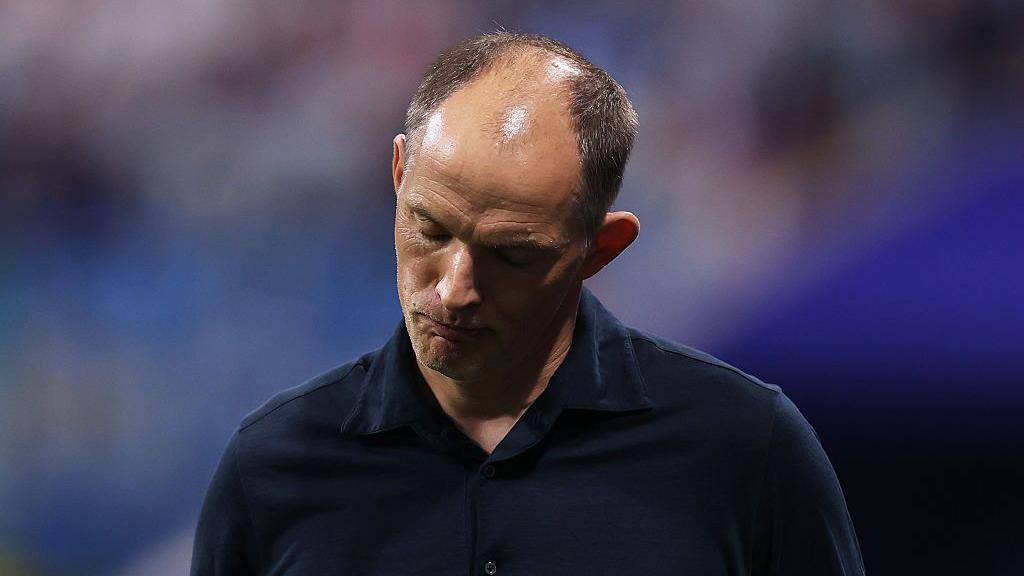
It all felt rather familiar as England exited the World Cup with a 2-1 semi-final defeat by Argentina.
Too pragmatic, poor use of substitutes, sitting back too deep and when faced with their first real big opponent of the tournament, a crushing defeat.
All well-known - if at times perhaps unfair - criticisms of Sir Gareth Southgate's England teams.
But this was under the management of Thomas Tuchel, the German brought in to signal a change of approach for England - one that was supposed to bring a first World Cup in 60 years.
So with comparisons being drawn between Tuchel and his predecessor, what has really changed for England?
In March 2025, Tuchel was asked about England's Euro 2024 campaign under Southgate.
He did not hold back.
Tuchel felt that England did not have "a clear playing style". When asked what was missing, he reeled off a long list: "The identity, the clarity, the rhythms, the repetition of patterns, the freedom of players, the expression of players, the hunger.
"[England] were more afraid to drop out of the tournament, in my observation, than having the excitement and hunger to win it."
Fast forward 16 months and Tuchel's analysis of his predecessor's side could indeed be applied to his team's 2-1 loss to Argentina.
It's been no secret what Tuchel has been working towards with England.
The German has taken a system-first approach to international management. His World Cup squad left out a wealth of technical talent including Phil Foden, Cole Palmer and Trent Alexander-Arnold.
Before raw quality or star names are considered, Tuchel had in mind the type of team he wanted to see, leaning on specific tactics and the aforementioned "repetition of patterns".
And so the players he selected were the ones that he felt could best carry out the roles he wanted in his England system.
This is why before the World Cup began, debates were had about whether Jude Bellingham or Morgan Rogers would play as the number 10, or whether Anthony Gordon or Marcus Rashford would play on the left wing.
Tuchel selected similar profiles to maintain the squad's style, banking on nothing but plan A working – something which ultimately did not happen.
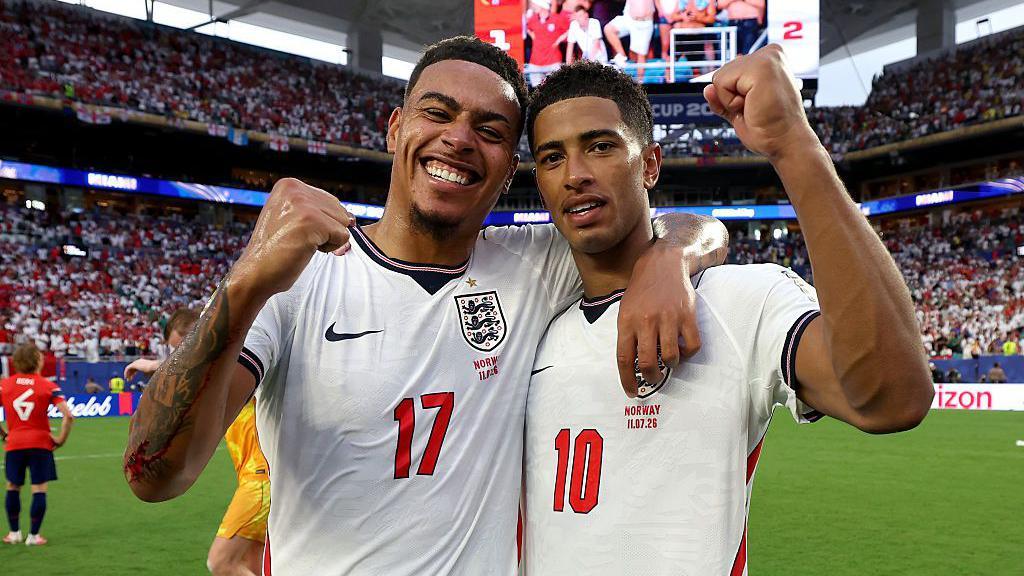
By the end of the tournament, partly driven by injuries, we saw Rogers and Bellingham share the pitch – one on the right wing.
Prior to the tournament, the suggestion was Rogers and Bellingham would be competing for the same position
The "identity" of his side was supposed to come in the form of a few key principles.
Tuchel and his assistant coach, Anthony Barry, have spoken about borrowing ideas from the current version of the Premier League.
Building up short, enticing pressure, playing quickly across the middle of the pitch – whether through powerful carrying or long balls – to find runners in attack against fewer defenders were all ideas England were seen trying to do every game, to varying levels of success.
The second half of the 4-2 win against Croatia, in their opening match, was perhaps the closest example of what Tuchel's ideal version of England was meant to be.
The other part of Tuchel's system that was continually emphasised was use of wide triangles to create chances, with the 52-year-old reluctant to see his side build through the centre.
Rotations and runs off the ball between the full-back, central midfielder and winger before arriving at the byline was supposed to be the main method of chance creation for Tuchel's England, but as much as they tried to make it click, it again did not come to fruition.
England attracted pressure, used wide rotations and runners in behind well vs Croatia
Tuchel's top-down approach differed greatly from Southgate's bottom-up approach, which partly explains Tuchel feeling Southgate's side lacked identity, clarity, rhythm or repeated patterns.
Southgate likely did not rely on a predetermined attacking strategy so it is fair to say his attack was less clear or repetitive than Tuchel's - but this was because he took a player-first approach.
He aimed to get the best talent in the country in one functioning and balanced starting 11. This was, at times, to his detriment – think Alexander-Arnold's struggles playing in midfield.
Southgate was still able to go far in tournaments because ultimately he looked to give England's impressive attackers – such as Bellingham, Raheem Sterling and Cole Palmer – the licence to play in zones that suited them.
When paired with a stronger defensive foundation, his man-management, and game-breaking set-piece threat, England usually had the edge over teams with less talent in their ranks.
What jumps out is that although both managers have started from opposite tactical viewpoints, there are clear similarities in both their tournament runs – much to Tuchel's frustration.
After England's victory against Norway, Tuchel said: "The result is fantastic but I'm not happy with the performance," before adding, "[we were] sloppy, tactical mistakes, not fast enough, not repetitive enough."
These all speak to fact that the principles he wanted to see in his side were not on show.
Both goals against Norway came from moments of individual brilliance against disorganised defences.
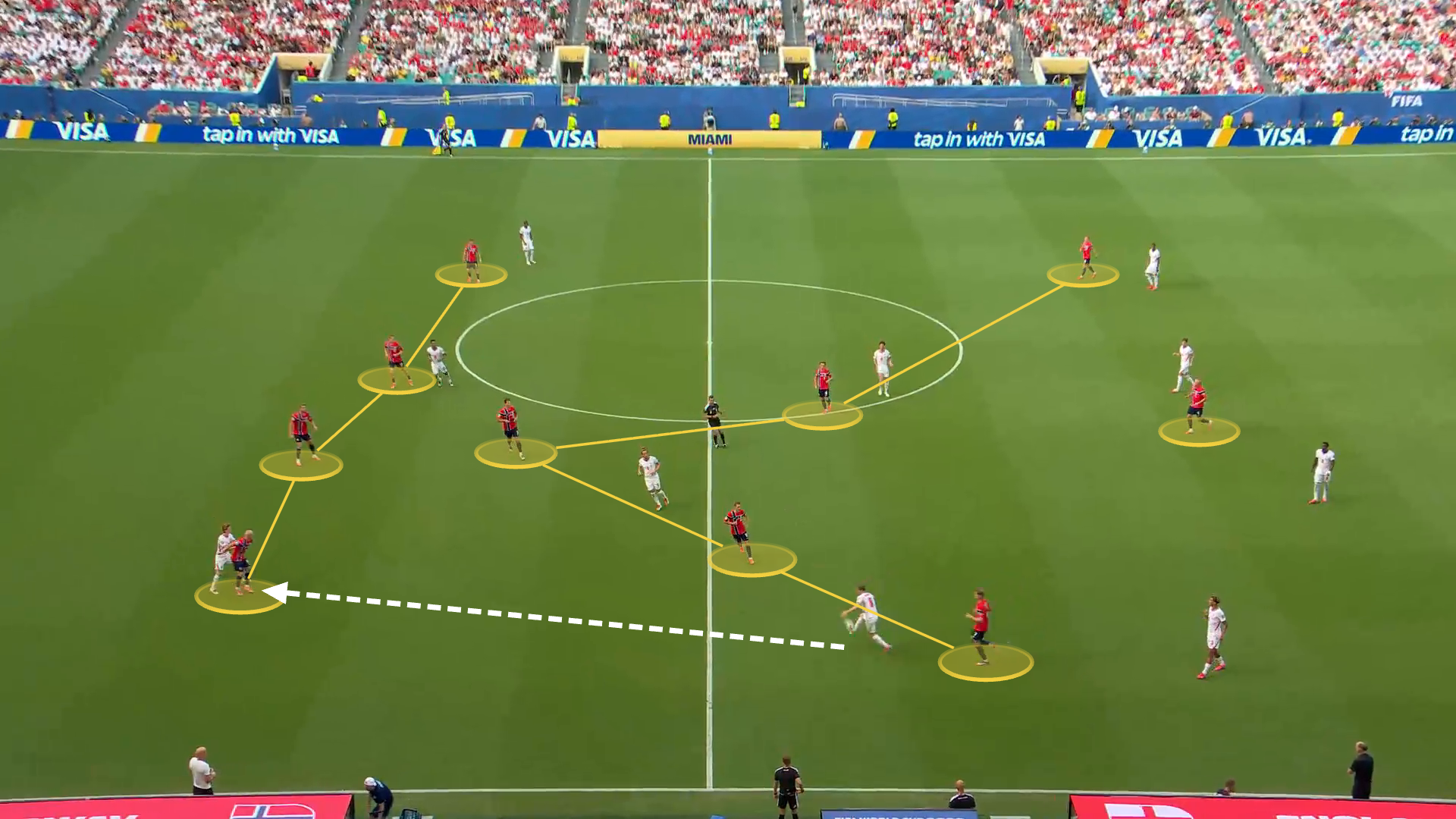
A goal-kick that fell short and landed at Elliot Anderson's feet gave England possession against a Norway side not in their rigid 4-5-1 shape and through direct running and quick passing, Bellingham was then able to score.
The winner came from the second phase of a corner, before Rogers had a long shot parried into Bellingham's path.
Those goals feel more Southgate than Tuchel – player-led, intuitive and slightly chaotic rather than repetitive, drilled and choreographed.
England struggled to break down Norway's settled defensive shape but when Orjan Nyland's goal-kick landed at Anderson's feet, their 4-5-1 was disjointed. England's forwards took advantage of this resulting in a Bellingham goal
Southgate was happy to use a back five from the start of games if it allowed England to match opponents who lined up with five attacking players.
There is a feeling that this does, however, communicate to both the players and fans a level of inferiority.
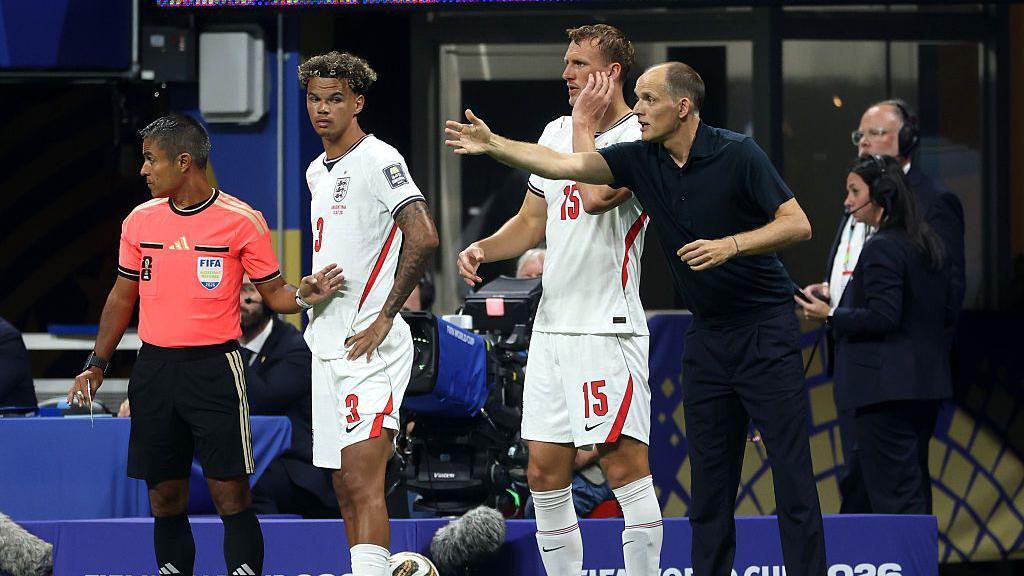
Tuchel – with his system-first approach – hadn't shown any signs of doing that from the start of games but it's interesting that when under pressure, he brought on an extra defender to match up numerically with Argentina's forwards too.
Argentina's substitutions by comparison were risky, brave and front-footed.
Tuchel suggested afterwards that dropping into a low defence immediately after scoring was not instructed but rather a reaction from his players. However, his substitutions looked to control damage rather than wrestle back control.
England manager Thomas Tuchel sent on Nico O'Reilly and Dan Burn against Argentina as substitutes
Watching Southgate's big-game losses back, there wasn't an obvious instruction to play defensively. Instead England struggled to build out from the back and defend their lead through possession football.
And without players able to get on the ball and keep it, England are left defending while their opponents launch wave after wave of attack.
This was also the case for Tuchel's England against Argentina, who had just 12% possession between Anthony Gordon's 55th-minute opening goal and Enzo Fernandez's 85th-minute equaliser.
Irrespective of how good England can look or what approach they take, this appears to be an ongoing issue.
If England are to overcome their weakness and start winning those big games, something has to change.
And perhaps a combination of Southgate's technical approach and Tuchel's tactical methods may be a step in the right direction.